
Learn How To Tell Real Silk From Polyester Using Simple Methods
4 Easy Ways to Identify Real Silk Scarves vs. Polyester
When shopping for a luxurious silk scarf, silk stole or a silk shawl you want to be sure you’re getting the real deal. There’s nothing quite like the softness, sheen, and elegance of genuine silk. Unfortunately, the market is flooded with scarves labeled as silk, but many turn out to be polyester or other synthetic fabrics. To avoid falling for these imposters, you need to know how to tell real silk from polyester.
Table of Contents

Why Buy Real Silk? - Features and Benefits of Real Silk
- Healthy For Your Skin: Silk is composed of natural proteins, fibroin and sericin which makes it hypoallergenic and unlikely to irritate those with sensitive skin or allergies. Dust mite droppings are known to be one of the leading causes of household allergies. Unlike some materials, silk doesn’t require hazardous chemical treatments to enhance its softness or wearability. Moreover, silk possesses remarkable resistance to the growth of mold, mildew, and fungi.
- Healthy For Your Hair: Authentic silk helps maintain your hair’s natural moisture and oils, resulting in a more lustrous appearance. Its smooth and cling-free properties allow your hair to effortlessly glide across finely woven silk scarves, reducing excessive friction, tugging, or pulling. On the contrary, polyester, although smooth, lacks the velvety softness that characterizes silk.
- The Unique Luster of Silk: One of the most enchanting qualities of silk is its unique luster. Silk has a subtle sheen that captures and reflects light in a way that no synthetic fabric can replicate. When you hold a real silk scarf to the light, you’ll notice that its color subtly changes depending on how you angle it. This pearlescent effect is a result of the way silk fibers interact with light. In contrast, polyester has a flat, unchanging white sheen, regardless of how it’s held. So, being able to identify real silk allows you to enjoy the distinctive luster that only silk can provide.
- Environmental Impact: Understanding the difference between silk and polyester is not just about personal comfort; it’s also about making environmentally responsible choices. Silk is a natural, biodegradable fiber, while polyester is synthetic, non-biodegradable and has a higher carbon footprint (600 times more than silk). By choosing real silk over polyester, you’re making a more sustainable choice that aligns with a greener, more environmentally conscious lifestyle.

What is a Stole? - Is a Stole another name for Shawl?
Price Can Be a Clue
If the price of a silk product seems too good to be true, it probably is. Silk is a luxurious material, and you can’t find genuine silk scarves or ties for a few dollars. Mass-produced polyester scarves and shawls often masquerade as silk online, so be skeptical of unbelievably low prices.

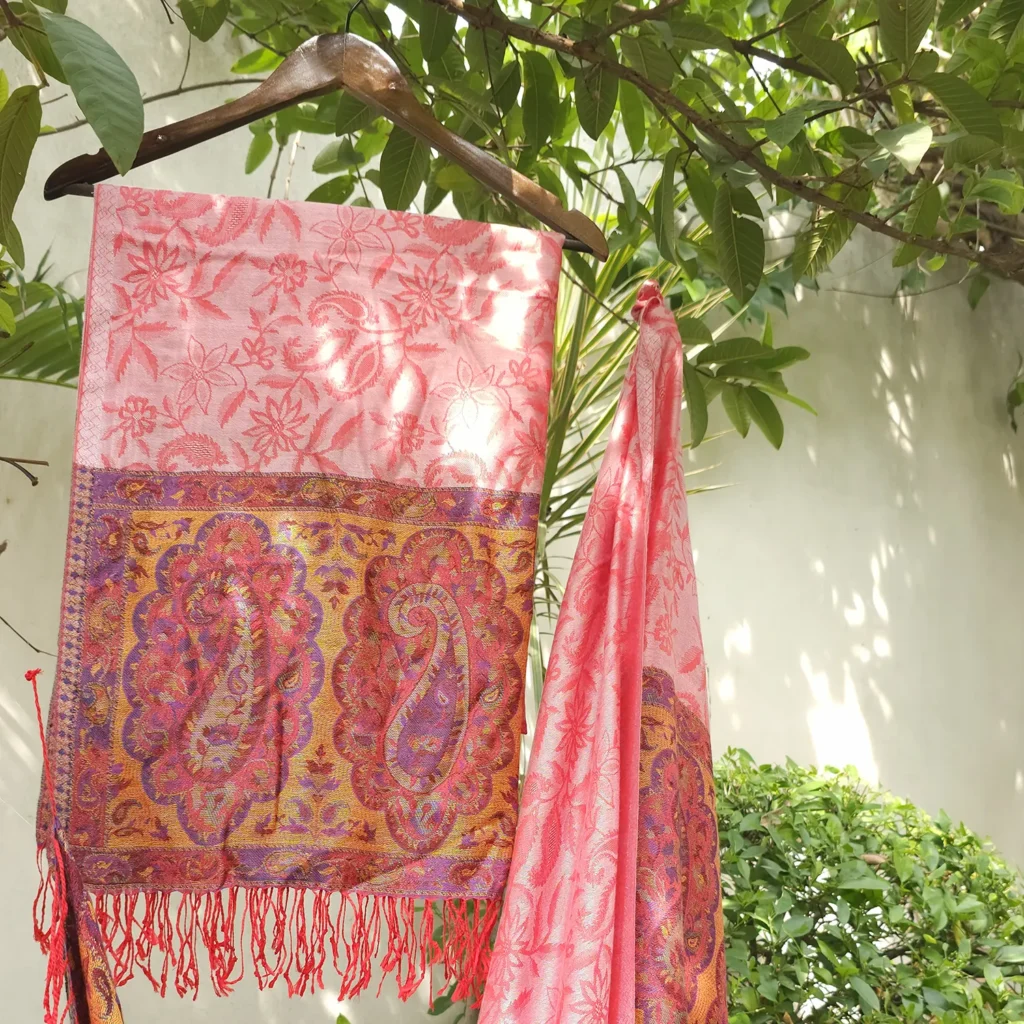
What is a Scarf? - Unraveling the Mystery of Scarves
The word “scarf” itself carries a rich history, with its roots somewhat shrouded in mystery. Some etymologists trace it back to the French word “escherpe,” while others believe it to have even earlier origins. However, one thing is certain: scarves have been a part of human culture for millennia. Dating back to 1350 BC in Ancient Egypt, we find one of the earliest recorded instances of scarves being worn. Queen Nefertiti adorned herself with this accessory, using it as part of her headdress. From these ancient origins, scarves have woven themselves into the fabric of our contemporary fashion world.
A Symphony of Materials: At Jaitleys, we embrace the diversity of materials that scarves can be crafted from. Our scarves come to life using a wide range of high quality yarns, including the luxurious silk, cozy cashmere, warm wool, comfortable cotton, airy linen, versatile modal, and flowing viscose. This wide array of materials allows us to create scarves that cater to different preferences, styles, and occasions.
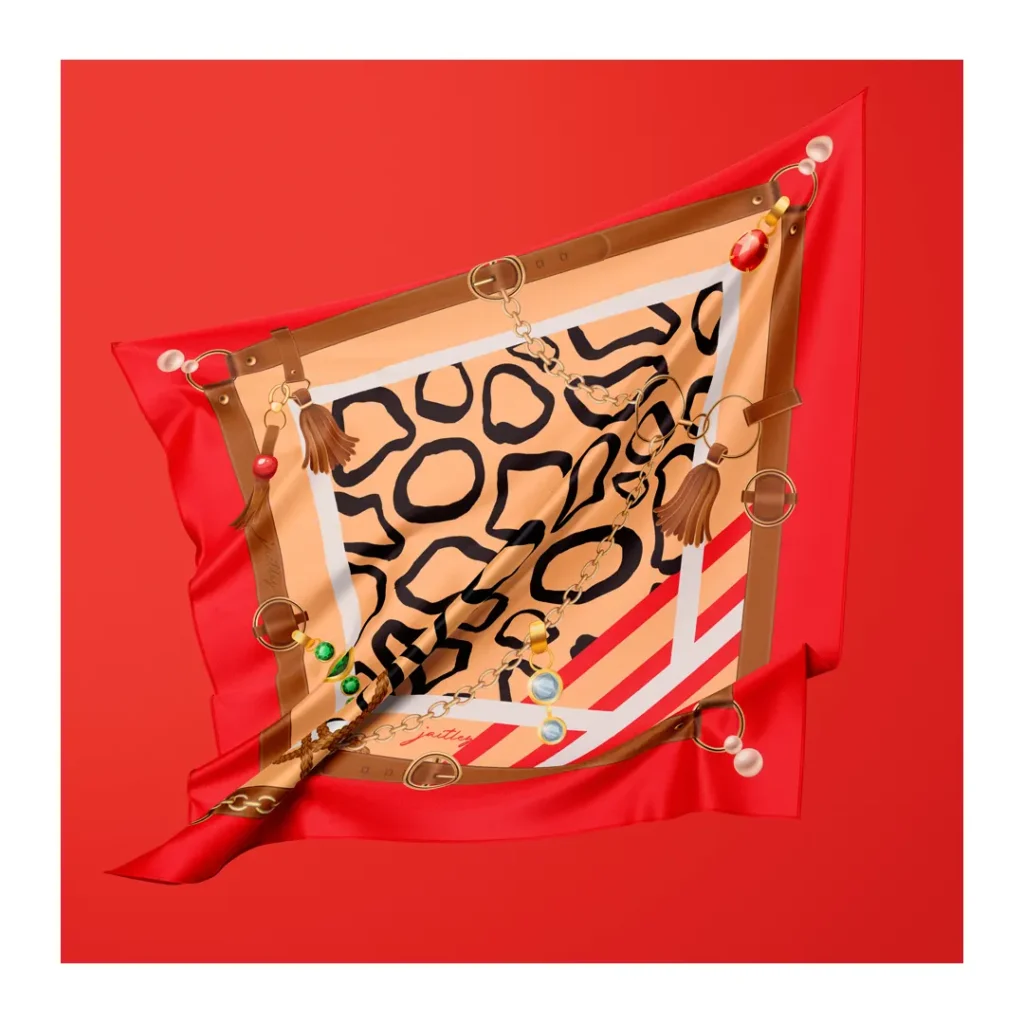
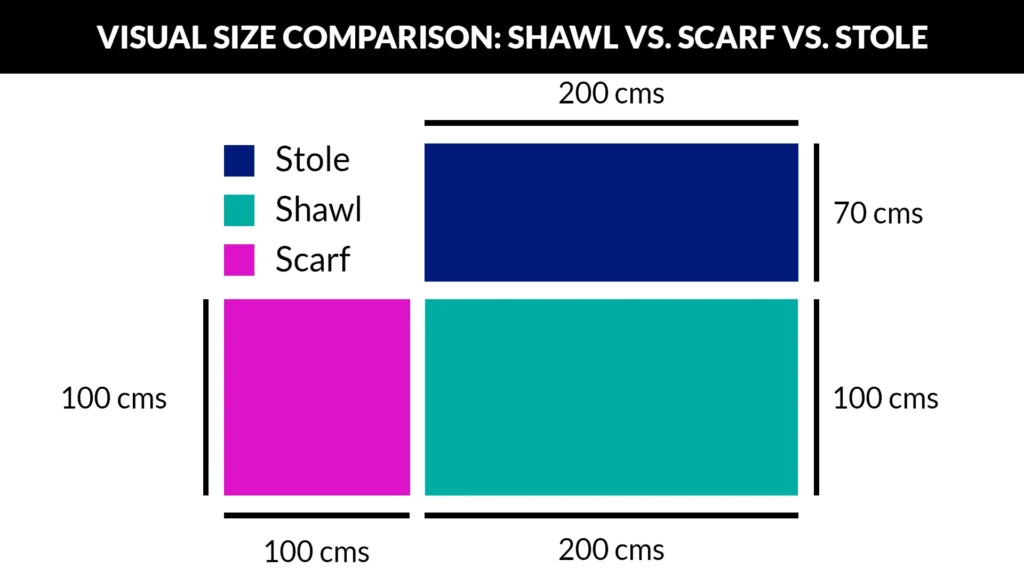
Sizes to Suit Every Taste: Scarves come in various sizes to cater to different needs and fashion statements. The traditional square silk scarf measures 100×100 centimeters, while mufflers, which are a longer variation, typically measure 34×160 centimeters. These size options ensure that you can find the perfect scarf to match your outfit and personal style.
A Versatile Fashion Accessory: Scarves are renowned for their adaptability. They have been popularized by high-end European brands like Burberry, Hermès, Louis Vuitton, and Chanel, which have elevated them into iconic fashion pieces. Scarves, in various shapes and forms, have found their place in both formal and casual attire. They often serve as decorative elements, adding a touch of sophistication or a pop of color to an ensemble. Men, too, have embraced the scarf, sometimes replacing traditional ties with small square silk scarves, typically measuring 50 centimeters. These scarves can be elegantly folded as cravats or ascots, offering a stylish alternative in menswear.
The Interchangeability of Terms: It’s worth noting that the fashion world has sometimes blurred the lines between scarves, stoles, and other similar accessories. Practically speaking, oblong (rectangle) scarves are essentially stoles, so the terminology is bound to overlap. This interchangeability of terms has led to occasional confusion, with people using “stoles” and “scarves” interchangeably. However, regardless of nomenclature, scarves remain beloved and cherished fashion items that have earned their permanent place as versatile and stylish accessories.
In essence, scarves have a storied history that spans civilizations, and they continue to evolve as a dynamic and beloved component of modern fashion. Their diverse materials, sizes, and styles ensure that there’s a scarf for every occasion, outfit, and personal taste. Whether as an artistic statement, a functional accessory, or both, scarves remain a symbol of sartorial elegance and self-expression.


Shawl vs Scarf vs Stole: 3 Important Differences between shawls, scarves and stoles
| Accessory | Shape | Size | Purpose |
|---|---|---|---|
| Shawl | Rectangle | 100×200 cms | Wrapped over the body for cozy warmth and insulation, shawls often find their spotlight during religious or ceremonial events. |
| Stole | Rectangle | 70×200 cms | Stoles are draped over shoulders with formal attire or worn around the neck with casual clothing. |
| Scarf | Square/Rectangle | 100×100 cms/34×160 cms | Scarves are tied over the head like a headscarf, worn around the neck as a neck scarf or muffler, or wrapped around handbags for added style. |
The Wrap-Up on Wraps - But What About "Wrap"?
In the world of fashion terminology, the relatively newer term “wrap” has caused some additional confusion when discussing shawls and stoles. This term is often used interchangeably for both shawls and stoles, and it can refer to a piece of fabric that is designed to be “wrapped” around the body in a similar fashion.
Wraps typically share characteristics with both shawls and stoles, making it challenging to categorize them as exclusively one or the other. They may have the length of a shawl, providing ample coverage, while also offering the lightweight and easy draping qualities associated with stoles. In essence, wraps are designed for versatility, providing wearers with the freedom to adapt them to various styles and occasions.
The use of “wrap” as a term highlights the ever-evolving nature of fashion vocabulary. As fashion trends and preferences shift, new words and phrases emerge to describe the myriad of styles and accessories available. While this terminology can be fluid and open to interpretation, it’s essential to remember that what truly matters is how these pieces enhance your personal style and comfort.
So, whether you prefer to call it a shawl, stole, scarf, or wrap, the key is finding the accessory that best suits your needs, complements your outfit, and makes you feel confident and stylish. After all, fashion is about self-expression, and these versatile accessories offer you a canvas to paint your unique style story.
Shawl vs Scarf or Stole vs Shawl: Who Wins? - The Conclusion
Shawl, stole, or scarf? The choice may differ among fashion connoisseurs, but for most, they represent the same versatile accessory, adaptable to a wide range of styles and occasions. These fashion essentials are more than mere clothing; they are expressions of personal style and practicality.
Scarves, in their countless forms, have proven to be dynamic pieces, ever-evolving with each season’s trends. They serve as the perfect canvas for your unique fashion story, allowing you to experiment with various looks. Whether you drape them as trendy headscarves, tie them as belts, wrap them around your wrists as stylish accents, or even embellish your handbags with their charm, scarves have secured a permanent place in everyone’s wardrobe.
These shawls, stoles, scarves, or whatever you prefer to call them, offer not only aesthetic appeal but also comfort, protection, and modesty. They are cherished fashion accessories that effortlessly combine form and function.
So, wear them with pride and style! Embrace the versatility they bring to your wardrobe, and let them be an extension of your personality. Whether you’re donning a shawl for warmth, wrapping a stole for elegance, or tying a scarf for a pop of color, these accessories are a testament to your unique fashion journey. In the world of fashion, there are no strict rules; it’s all about self-expression, and scarves are your trusted companions on that stylish adventure.
Frequently Asked Questions (FAQ)
We hope these FAQs help clarify the differences between shawls, stoles, and scarves, allowing you to make the best fashion choices for any occasion.
Shawl is a loose piece of fabric draped over the shoulders, upper body, arms and shoulders. Occasionally, it is also worn over the head, often for religious or ceremonial purposes.
Shawls prioritize functionality over style, primarily serving the essential purpose of providing warmth and insulation against harsh weather conditions.
Scarves are usually smaller in size and come in various shapes and forms. Scarves can be square, oblong (rectangle), or triangle (when folded in half diagonally), while shawls and stoles are typically oblong.
They can be worn as headscarves, neck scarves, mufflers, or even as decorative accessories on handbags. Scarves are more about style and versatility.
Shawls are typically 100×200 centimeters, stoles are 70×200 centimeters, and scarves can vary in size from 100×100 centimeters (square) to 34×160 centimeters (muffler scarf) to 70×200 centimeters (long scarf), depending on the type and style.
Stoles are a more versatile choice and easier to carry. They are excellent for formal occasions and pair well with evening dresses. They provide warmth without the heaviness of a shawl.
Yes, “wraps” is a term that’s sometimes used interchangeably for both shawls and stoles, adding to the terminology confusion. It generally refers to any piece of fabric that can be “wrapped” around the body.
Tying a scarf as a headscarf is easy. Simply fold the scarf into a triangle, place the folded edge at your forehead, and tie the ends securely under your chin. Adjust for comfort and style, and you’re good to go.
Yes, you can! While shawls are great for colder seasons, stoles and scarves are suitable for year-round wear. Lightweight materials like silk and modal are perfect for warmer months, while heavier materials like wool provide warmth in winter.
You can explore a wide selection of these accessories at Jaitleys, we offers range of premium shawls, stoles, and scarves crafted from high-quality materials.